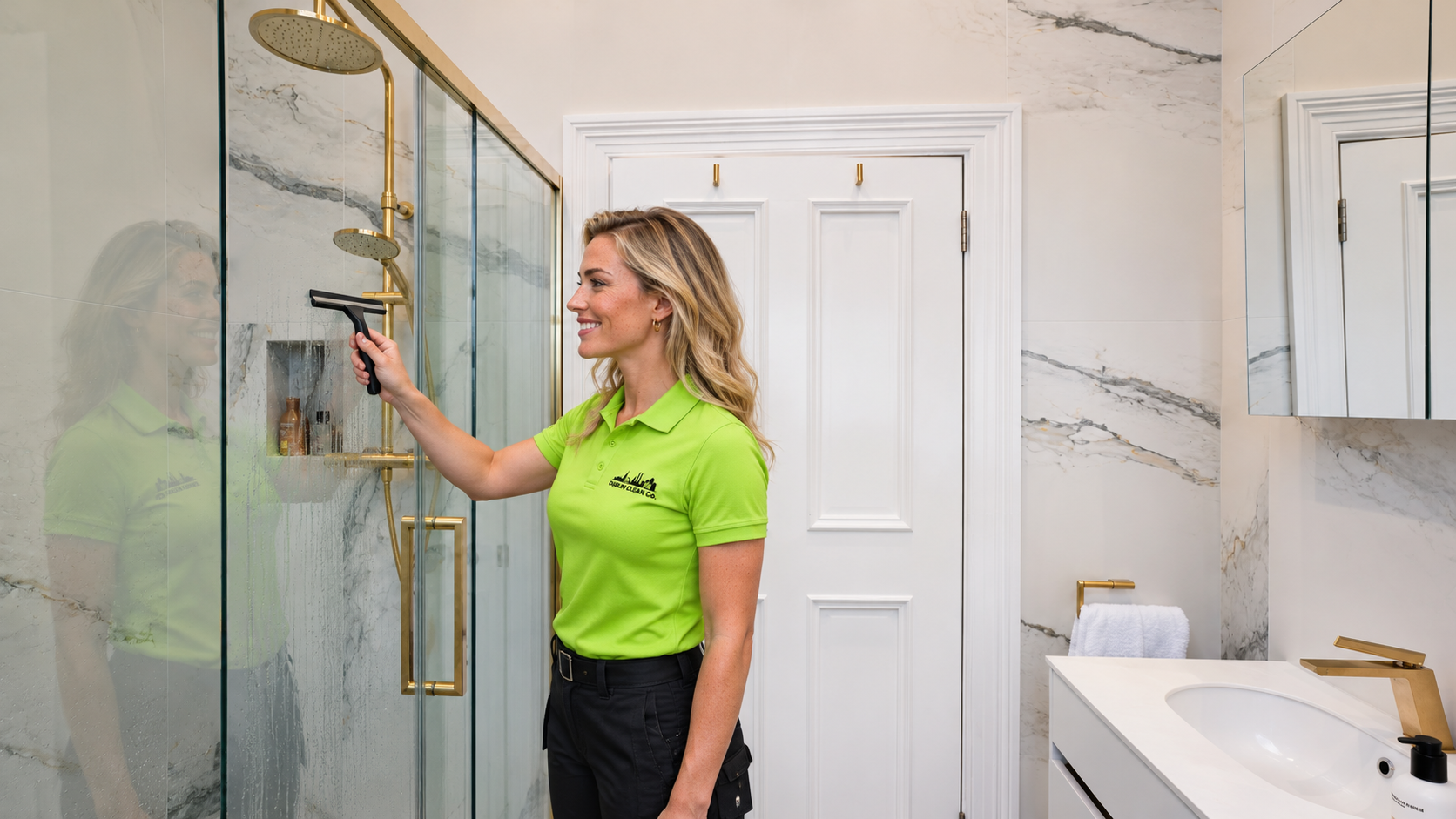
The answer is not always a stronger cleaner. Soap residue, mineral deposits and leftover cleaning product can each affect the appearance. Some older marks may be damage to the surface rather than something you can wipe off.
Check for a coating before you begin
Many shower screens have a protective or easy-clean treatment. Look up the screen's care instructions before using an acidic cleaner, an abrasive pad or a scraper. A product that is fine for ordinary glass may be unsuitable for a particular coating.
Check the materials around the glass too. Cleaner can run onto stone, metal trims, seals and a shower tray. The method needs to suit everything it will touch, not just the middle of the screen.
Gather soft cloths, a compatible cleaner and a suitable squeegee if permitted. Work from a stable position and keep the floor safe underfoot. Do not balance on the edge of the bath to reach a high corner.
Start with a gentle clean
Follow the screen manufacturer's method to remove ordinary surface residue. Where a mild cleaning solution is permitted, use the recommended amount on a soft cloth and work across a manageable area. More product can simply leave more residue to remove.
Pay attention to the lower part of the screen, where water and soap often collect. Avoid flooding the hinges or pushing liquid into fittings. Rinse or wipe off the product as instructed, using a clean cloth rather than one already carrying loosened grime.
Dry the glass with a suitable lint-free cloth or approved squeegee. This finishing step matters: leaving cleaning water to evaporate can give you another set of marks before you have even put the bottle away.
Treat stubborn deposits with care
If a compatible everyday clean leaves deposits behind, check whether the manufacturer permits a limescale treatment. Follow its dilution and contact time, test discreetly and protect any sensitive surrounding surfaces.
Vinegar appears in some shower cleaning guidance, including advice from Mira, but that does not make it right for every screen and bathroom. Coatings, natural stone and fittings may rule it out. Do not apply a homemade acidic mixture simply because it worked on a different shower.
Never mix a descaler or vinegar with bleach or another cleaner. If you are changing methods, follow the product instructions for removing residue first. There is no benefit in making the chemistry more complicated.
Do not forget accessible edges and tracks
Use a soft cloth or an appropriate gentle brush on accessible tracks and edges, where the care instructions allow it. Remove loose debris carefully and leave drainage openings clear without probing into hidden mechanisms.
Do not dismantle rollers, hinges or a glass door as part of an ordinary clean. If the door drags, a seal is loose or a fitting is damaged, arrange appropriate attention. Cleaning should not become an improvised repair.
The joints beside the screen may need a different method. Our guide to cleaning grout explains why tile joints and flexible sealant should be identified before choosing a product.
Make the improvement last
A short finishing habit after a shower can reduce the next clean. Where the manufacturer permits it, draw a squeegee down the glass and wipe accessible pooled water. Use the bathroom's ventilation as intended and let suitable surfaces dry.
Keep a dedicated cloth nearby, somewhere it can dry between uses. A quick habit is easier to maintain when the tool is already within reach. You do not need to turn every shower into a bathroom cleaning session.
If the whole room needs more attention, deep cleaning in Dublin can be discussed around the surfaces and tasks involved. Send a description of persistent cloudiness when enquiring. Removable residue and etched or damaged glass are different problems, and a cleaning result should not be promised before that distinction is understood.
Frequently asked questions
Can I use vinegar on shower glass?
Only where the screen manufacturer permits it and nearby surfaces are compatible. Some coatings, stone and fittings need a different method. Always follow the specific care instructions.
Why is my shower glass still cloudy after cleaning?
There may be remaining deposits or product residue, but cloudiness can also reflect surface damage. Rinse and dry as directed, then reassess. Avoid repeated aggressive treatments if the cause is unclear.
Does a squeegee replace cleaning?
No. It can help remove water and reduce marks between cleans, where suitable for the screen, but it will not remove every deposit. Keep up the manufacturer's normal cleaning routine.
Can professional cleaning remove every mark?
No cleaning service can guarantee that every mark is removable. Etching, scratches and damaged coatings may remain. Describe the screen and its condition so expectations and scope can be agreed.