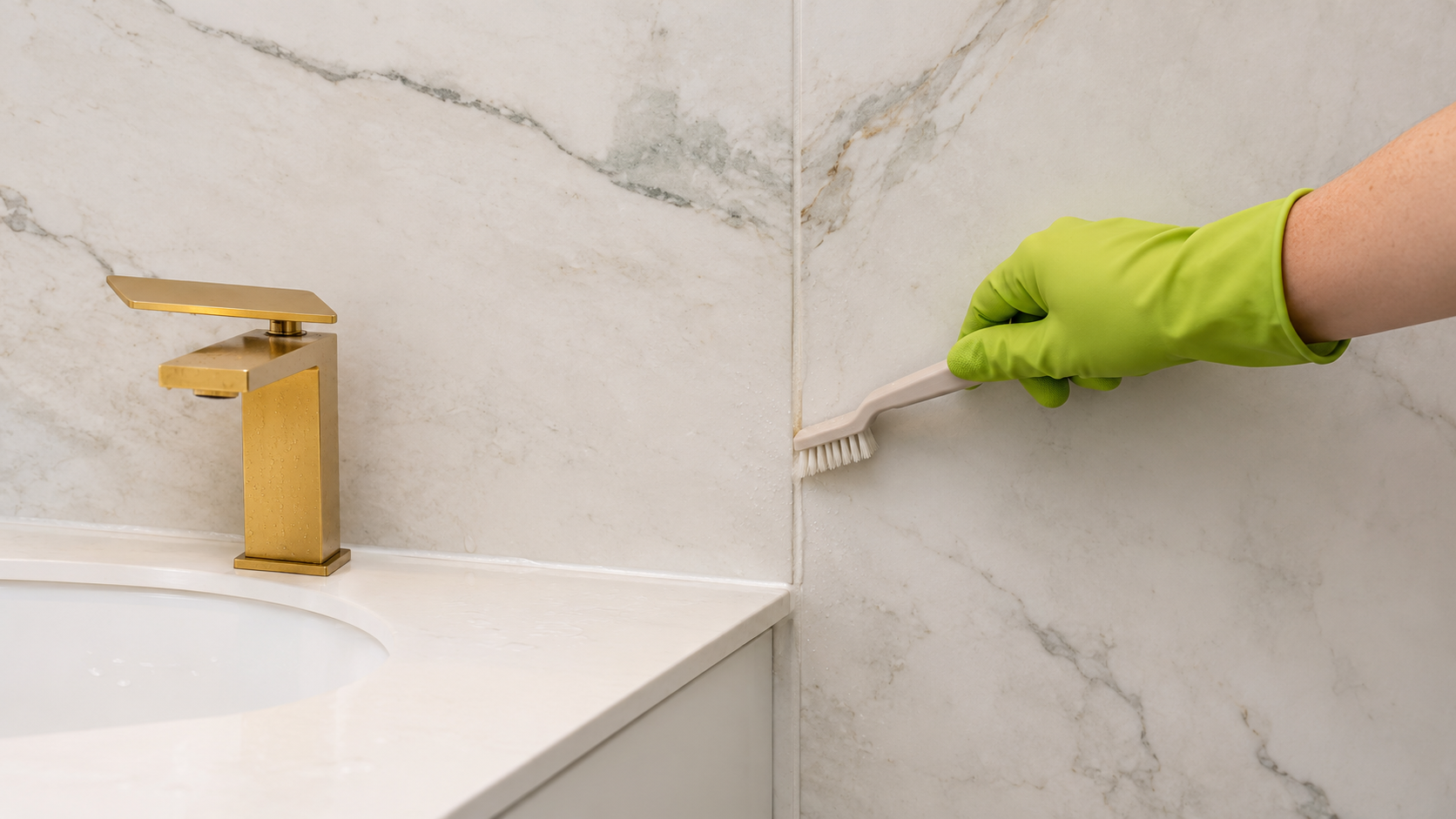
Before reaching for the strongest bottle in the cupboard, find out what those lines are made of. Grout, silicone and the tile beside them do not necessarily tolerate the same cleaner. A little attention here can save a much larger repair later.
Know which surface you are cleaning
Cement-based grout and epoxy grout have different care requirements. A flexible strip around a bath, shower tray or change of plane may be sealant rather than grout. Natural stone tiles introduce another consideration, because acids can damage some stone finishes.
Check installation paperwork or ask the installer if you are unsure. Read any sealer care guidance too. A product labelled for grout may still exclude your tiles, metal fittings or sealant.
Take a moment to inspect the joints. Crumbling edges, missing sections and loose tiles need attention beyond cleaning. Scrubbing harder can turn a small weakness into a bigger gap.
Remove the loose dirt first
Vacuum or sweep a floor before wet cleaning. On a wall, remove accessible loose dust with a suitable soft cloth. This keeps grit from being worked across the surface and stops fresh cleaning solution turning immediately into muddy water.
Choose a cleaner specifically compatible with both the grout and surrounding material. Try it on an inconspicuous area, following the complete process, and inspect after it has dried. A patch that looks fine while wet may look different later.
Work on a small section at a time
Apply the permitted amount and allow only the contact time given on the label. Use a soft nylon brush or another tool approved for the surface. The aim is to loosen the deposit, not grind away the joint.
Lift away the dirty solution with a clean cloth or the removal method specified by the product. Rinse where instructed and change the water or cloth when it becomes dirty. On floors, avoid spreading the same grey water back over the area you have just cleaned.
Keep the work manageable. A small section you can clean, rinse and finish properly is more useful than a whole floor coated in a product that dries before you reach it. Avoid flooding joints or neighbouring materials that should not be saturated.
Judge the result when it is dry
Wet grout can look darker, so allow the area to dry before deciding whether it needs another permitted treatment. Some discolouration is a surface deposit; some is deeper staining, ageing or the original colour of the grout.
White is not the goal if the grout was grey or cream to begin with. If a cleaned joint remains marked, get advice on the material rather than escalating through a series of incompatible chemicals. A grout specialist can help distinguish a cleaning issue from a repair or restoration job.
Be careful with household shortcuts
Vinegar and acidic cleaners are not a safe default for cementitious grout or nearby natural stone. Abrasive tools can also damage joints and finishes. Bleach is not a universal grout cleaner, and it should never be mixed with an acid, ammonia or another cleaning product.
Repeated dark staining around a shower deserves a closer look at ventilation, drying and the condition of the sealant. Cleaning alone will not repair a failed seal or an underlying moisture problem. Persistent or extensive growth should be assessed appropriately rather than covered up.
Keep the clean looking better
Remove dirty cleaning water instead of letting it settle back into the joints. In a bathroom, use the ventilation provided and dry accessible wet surfaces where appropriate. Deal with spills using a compatible method before they have time to sit.
If the screen needs attention too, our guide to cleaning shower glass explains how to choose a method that respects coatings and neighbouring surfaces.
For a bathroom that needs a broader reset, see deep cleaning in Dublin. Describe the tile material and the condition of the joints when enquiring. Cleaning can improve removable deposits, but damaged grout, failed sealant and permanent staining need a separate conversation.
Frequently asked questions
Can I make every grout line white again?
No. Grout comes in different colours, and some marks are permanent or beneath the surface. Clean with a compatible product, let it dry and assess the result before considering restoration advice.
Is bleach the best cleaner for grout?
Not automatically. Suitability depends on the grout, sealer and adjacent surfaces. Follow the relevant care instructions and never mix bleach with other cleaning products.
Why does my grout look darker after cleaning?
Moisture can temporarily change its appearance. Allow it to dry before judging the result. If it stays unusually damp or discoloured, investigate the cause rather than repeatedly washing it.
Should grout be sealed after cleaning?
Some grout systems benefit from a compatible sealer; others do not require one. Check the grout and sealer manufacturer's guidance, including drying requirements. Sealing is not a substitute for repairing a damaged joint.