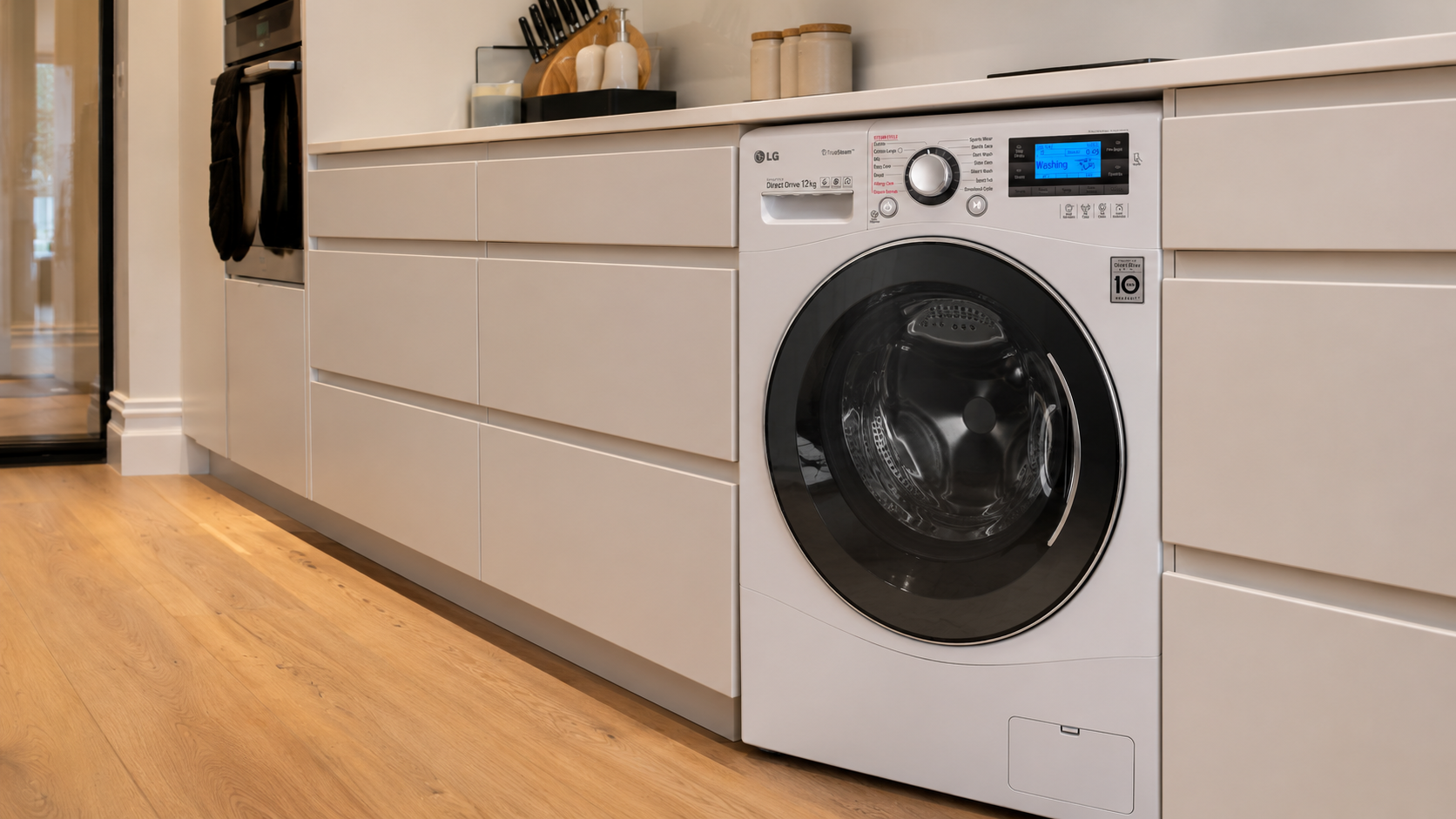
The drum gets most of our attention, but a washing machine has other places where moisture and laundry products collect. A sensible clean looks at the drawer, the accessible door seal and the maintenance programme together. It also leaves the plumbing and electrical repairs to someone qualified to handle them.
Check the instructions before the cleaning cupboard
Find the care guidance for your model, including any restrictions on descalers or household cleaning products. Automatic dosing systems, removable drawers and pump filters differ between machines. What slides out easily on one model may need a different release procedure on another.
Switch off and isolate the appliance as its manual directs before cleaning accessible parts. Have a soft cloth, a shallow container and towels ready. Do not open a pump filter while a machine contains hot water or is running.
Begin with the detergent drawer
If the manual allows removal, release the drawer using the proper catch. Wash the permitted parts using the specified method and gently loosen visible residue. A small soft brush may help around accessible corners, provided it does not damage the fittings.
Wipe the accessible drawer recess without pushing a tool into the machine. Dry and refit the parts correctly. Do not dismantle an automatic dosing reservoir or rinse electrical components under a tap.
Once it is clean, look at how much detergent you normally use. Follow the detergent and machine guidance for the load, soil level and local water conditions. Filling the compartment to the top by habit is not a reliable way to get cleaner clothes.
Take a closer look at the door seal
On a front loader, gently inspect the accessible folds of the rubber seal. Remove loose items such as coins, hair and tissues, then wipe the permitted areas with a soft cloth and the recommended cleaning solution. Finish as instructed and dry the accessible folds.
Avoid aggressive scrubbing or pulling at the seal. If it is torn, loose or leaking, stop treating the problem as ordinary dirt. Damage needs assessment.
Vinegar is often suggested online, but it is not universally suitable for washing machine rubber. Bosch, for example, advises against vinegar and other aggressive agents for cleaning door seals. Your model's instructions should decide what goes on yours.
Run the right maintenance programme
Use the appliance's drum cleaning or maintenance cycle where fitted, following its instructions about temperature, an empty drum and approved cleaning products. A random hot wash is not necessarily the same programme.
Do not add a dishwasher tablet or a mixture of household chemicals. Use a washing machine product only where it is compatible with the appliance, and follow the dose. Cleaning and descaling are also different jobs: a product intended to remove detergent residue may not address limescale.
If your machine has an accessible pump filter, treat that as a separate maintenance task. Follow the exact drainage and removal sequence in the manual, including cooling, isolation and water collection. Leave it to an appropriate professional if access is difficult or the instructions are unclear.
When the smell comes back
A cleaned drawer and drum will not fix a drainage fault. If the machine still smells, fails to drain, leaks or leaves water where it should not, arrange a check rather than continuing to add stronger products.
For everyday care, remove finished laundry promptly. Where the manual recommends airing the drawer or door, do so only when safe for children and pets. Wipe accessible moisture away and keep up with the recommended maintenance schedule.
The surrounding utility space benefits from a simpler routine: clear the top, wipe suitable surfaces and keep the floor accessible. Our guide to deep cleaning versus regular cleaning explains how those ordinary jobs fit into a wider household plan.
If keeping on top of the house is the bigger issue, regular house cleaning in Dublin may help with agreed household tasks. Appliance maintenance and repairs need to be discussed separately; they should not be assumed to form part of a normal cleaning visit.
Frequently asked questions
Can I clean my washing machine with vinegar?
Check the model instructions first. Vinegar is not a universal recommendation and can be unsuitable for some parts, including seals. Use a manufacturer-approved method for the specific area you are cleaning.
Will a hot wash remove every smell?
No. A suitable maintenance cycle may help with internal residue, but it will not necessarily clean the drawer or seal, and it will not fix a drainage problem. Check the likely source of the smell.
Can I put a dishwasher tablet in my washing machine?
Do not substitute dishwasher products for a washing machine cleaner. They are made for a different appliance. Follow the washing machine manufacturer's product and programme guidance.
How often should I run a maintenance wash?
Follow the interval or reminder specified for your model. Usage and laundry habits vary, so there is no single schedule that suits every household. Clean accessible residue when you notice it rather than waiting for a smell.