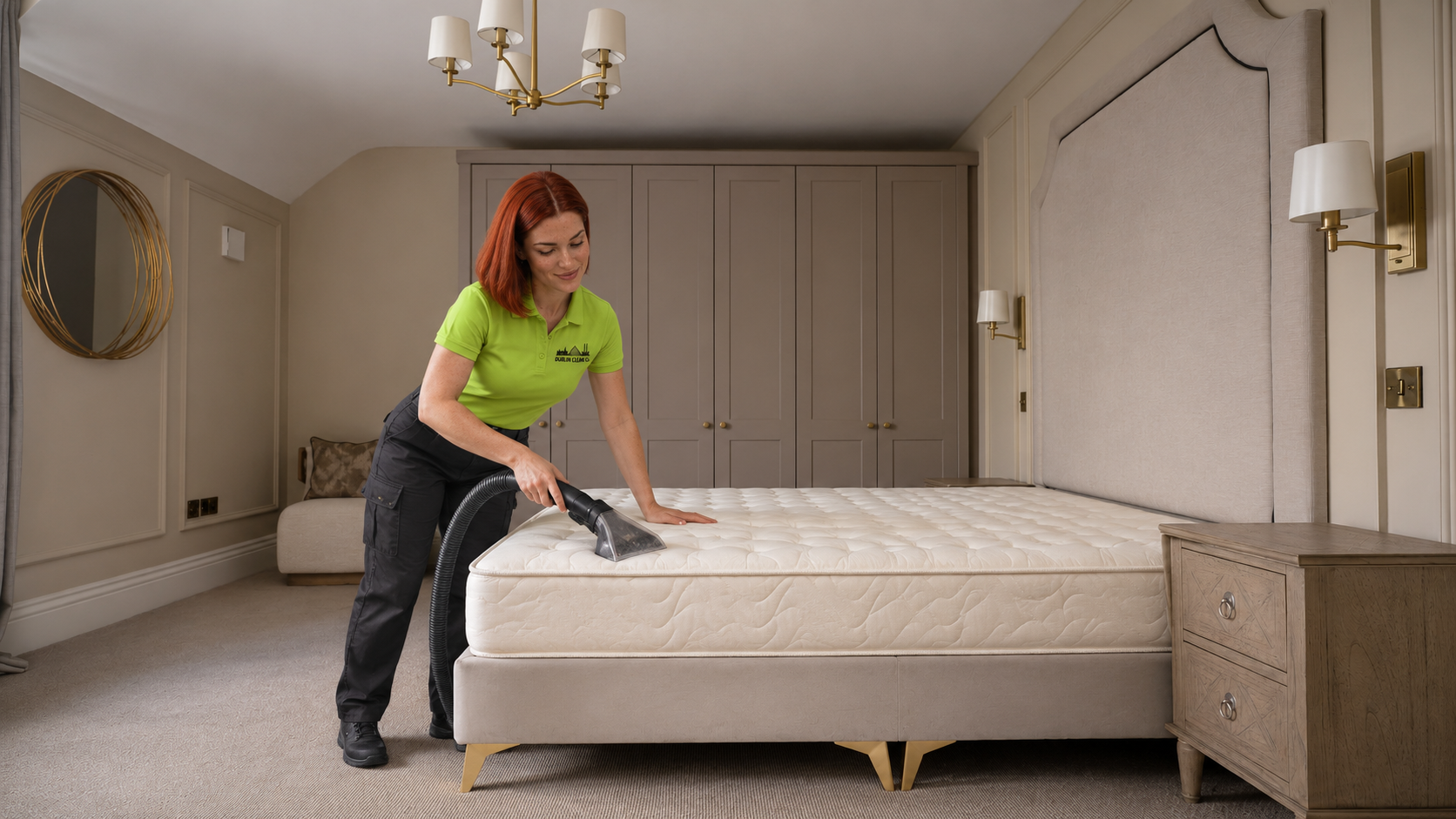
For many mattresses, that would create a bigger problem. Moisture can travel beneath the surface and be difficult to remove. The useful question is not simply how to clean a mattress, but how to care for the particular mattress you sleep on.
Read the label before stripping off a cover
Check the mattress instructions and any separate cover label. A zip does not necessarily mean that the cover is intended to be removed or washed at home. Some mattresses have internal layers that should remain enclosed.
Foam, springs, upholstery and removable covers all bring different care requirements. TEMPUR, for example, advises that its mattress material should not be washed or soaked, while care instructions for its covers vary. A cleaning method recommended for a washable cover is not automatically suitable for what sits underneath it.
If you cannot identify the model, contact the manufacturer before trying a wet treatment. It is easier to delay a stain treatment than reverse damage to the filling.
Give ordinary dust a gentle treatment
Strip the bed and launder sheets and any washable protector according to their labels. If the mattress manufacturer permits vacuuming, use the recommended setting and a clean suitable upholstery attachment. Work gently across accessible surfaces and seams without dragging a rough tool over the fabric.
Vacuuming can remove loose surface material; it is not proof that a mattress has been sanitised or made allergen-free. Avoid spraying fragrance over it to create an impression of cleanliness. A strong scent can make a bedroom less comfortable without addressing the original problem.
Use the opportunity to clean the bed frame and accessible floor with methods appropriate to their finishes. Those are separate jobs, but they make putting on fresh linen feel worthwhile.
Blot a fresh spill rather than spreading it
Remove bedding promptly and follow the manufacturer's spill instructions. Where permitted, use a clean absorbent cloth to blot liquid gently. Rubbing can spread the mark and push moisture further into the material.
If spot cleaning is allowed, use only the specified product and the smallest permitted amount. Test where directed. Do not pour water onto the mattress or assume a carpet shampooer, steam cleaner or wet extraction machine is suitable.
Older stains are harder to assess. They may involve several materials or previous cleaning products, and there is no responsible universal recipe for removing them. Ask the manufacturer or an appropriate mattress cleaning specialist what is possible before escalating the treatment.
Allow the mattress to dry fully
Follow the care instructions for drying and leave the mattress uncovered until it is fully dry. Air movement may help where the manufacturer permits it, but do not use concentrated heat or improvise with a hairdryer on a delicate surface.
A surface that feels dry does not prove that soaked internal material has dried. If a substantial spill has entered the mattress, seek advice rather than covering it and hoping for the best. Plan any permitted cleaning early enough that the bed does not have to be remade in a hurry.
Persistent dampness, a musty smell or visible suspected mould needs appropriate assessment. Repeatedly adding scented products is not a solution, and heavily affected material may not be recoverable by cleaning.
Make the next spill less dramatic
A suitable mattress protector can make everyday care easier. Choose one compatible with the mattress and wash it according to its label. Let it dry fully before refitting it.
Rotate or turn the mattress only as its manufacturer recommends. Some models are designed to be rotated but never flipped; others have different instructions. The same model-specific approach that protects the mattress during cleaning also helps with ordinary care.
If the bedroom needs a wider reset, our explanation of deep cleaning versus regular cleaning can help you decide which household tasks need attention. You can also enquire about one-off house cleaning in Dublin for agreed room-cleaning tasks. Specialist mattress treatment is a separate requirement and should not be assumed to be included.
Frequently asked questions
Can I steam clean my mattress?
Only if the manufacturer specifically permits that method. Heat and moisture can damage some materials, and drying can be difficult. Do not treat steam cleaning as a safe default.
Can I wash a mattress cover if it has a zip?
Not necessarily. Check the mattress instructions and the cover's care label before removing it. A zip alone does not establish that a cover is washable or intended for user removal.
Will bicarbonate of soda remove every mattress smell?
No. It is not a universal solution, and powders may be unsuitable or difficult to remove from some materials. Follow the manufacturer's method and investigate persistent odours or dampness.
Does Dublin Clean Co provide specialist mattress cleaning?
Ask about your requirements before booking. A household cleaning visit should not be taken to include specialist mattress treatment. The mattress material and problem may require manufacturer advice or a specialist service.