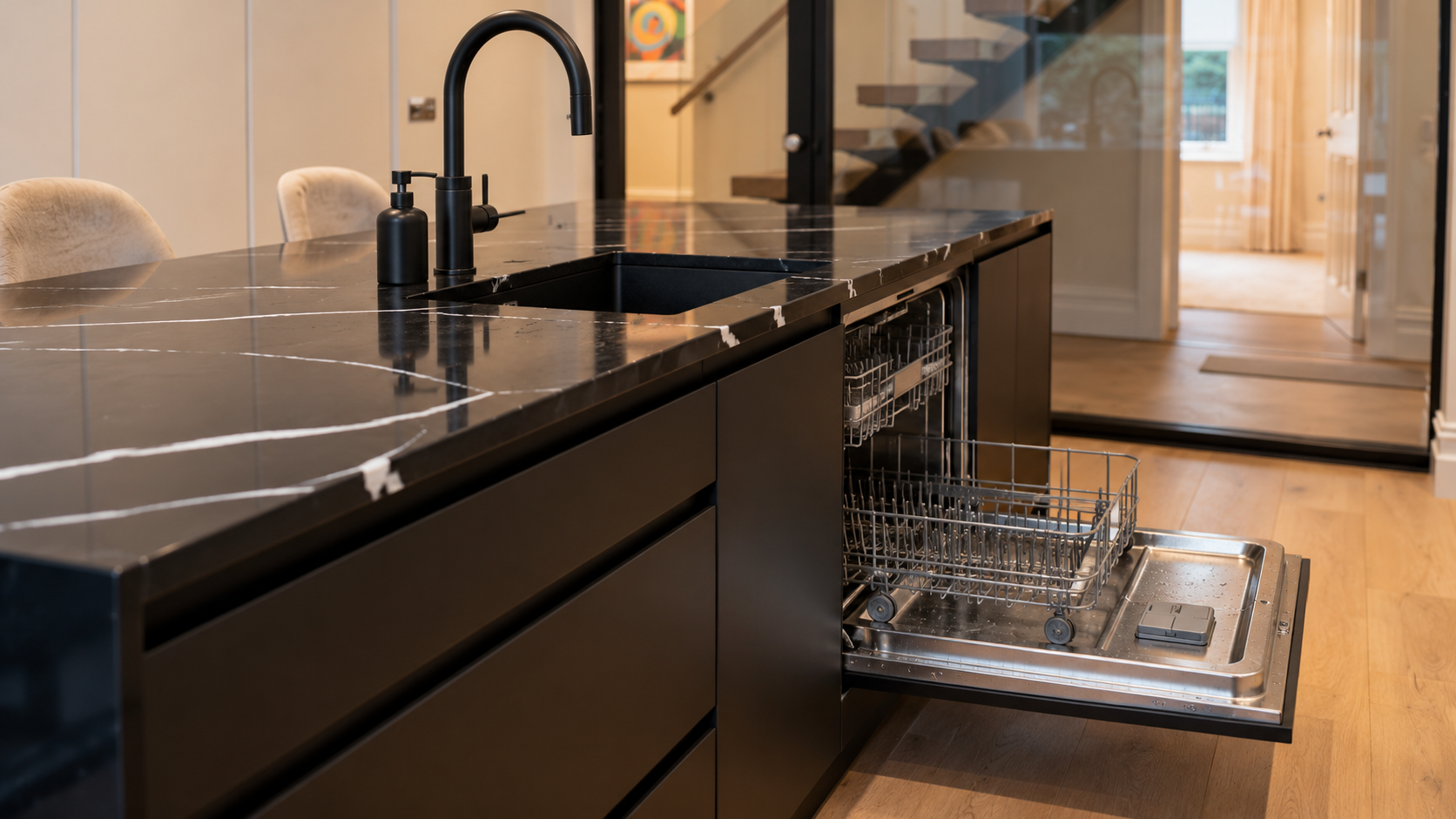
A little maintenance can help, but start with the right expectations. Cleaning removes accessible residue. It does not repair a pump, solve every drainage problem or compensate for a load that blocks the spray arms.
Find the instructions for your model
Read the care section before removing any parts. Filter assemblies, spray arms and cleaning programmes vary. Switch off and isolate the appliance as instructed, let it cool and use care around any sharp debris.
Take out the dishes and look at how the racks, filter and accessible parts fit together. A quick photograph can help you remember their positions, but the manual should guide removal and reassembly. Do not pull a component simply because it looks as though it ought to come out.
Start with the filter
If the filter is user-removable, release it exactly as instructed. Rinse and clean it using the approved method, taking care around trapped fragments. Do not reach blindly into residue or inaccessible openings.
Use a suitable soft brush where permitted and rinse away loosened material. Inspect accessible parts for damage before refitting them. The filter must sit and lock correctly; putting it back loosely is not a finished job.
Some appliances have different filter arrangements, so a generic twist-and-lift instruction is not right for every dishwasher. If yours does not match what you expect, check the model guide rather than forcing it.
Check accessible spray arms
With the machine off, inspect the spray arms for visible blockage and make sure they can move as intended. Remove them only if the manual provides a user procedure. Clean them using the specified method, without enlarging holes or pushing unsuitable sharp tools into them.
Refit everything correctly. When loading the dishwasher later, check that a tall pan or a dangling utensil will not obstruct movement. A clean spray arm cannot do much if a chopping board is holding it still.
Wipe the door edges and permitted seals
A soft cloth can reach accessible edges where residue collects outside the main wash area. Use a product compatible with the appliance and avoid excessive water around controls or fittings.
Clean seals gently without stretching or dislodging them. If a seal is damaged, or water leaks during use, arrange appropriate attention. Applying more cleaner will not mend the part.
Do not pour ordinary washing-up liquid into the dishwasher as a substitute for machine detergent. It can create excessive foam. If the manual permits a mild detergent for hand-cleaning a removable part, rinse it thoroughly as directed before reassembly.
Run the specified cleaning programme
Use a dishwasher-compatible maintenance product and the programme recommended by the manufacturer. Follow both sets of instructions about an empty machine, where to place the product and the correct dose.
Some products target grease and food residue; others address limescale. They are not interchangeable, and a machine may have separate guidance for salt, rinse aid and water hardness settings. Check those instructions rather than adding several products in the hope that one will solve the problem.
Vinegar and homemade mixtures are not a universal alternative. Use them only if expressly allowed for your appliance and never combine cleaning chemicals. One suitable treatment used correctly is easier to assess than a succession of experiments.
If the dishes still come out dirty
Check the loading pattern and the detergent dose and storage guidance. Look for items blocking the dispenser or spray arms, and use a programme suitable for the load. Persistent residue can have several causes, so avoid assuming the machine simply needs a stronger cleaner.
If water remains where it should not, the dishwasher reports an error, or a smell returns quickly despite correct maintenance, consult the troubleshooting instructions and arrange service if needed. Do not dismantle pumps or pipework as part of an ordinary household clean.
For the rest of the kitchen, our microwave cleaning guide is another manageable job. If you are preparing for visitors, the Christmas cleaning checklist helps put the appliance jobs in a sensible order.
You can also enquire about deep cleaning in Dublin for agreed household surfaces and tasks. Confirm any appliance work separately; a house clean should not be taken to include dishwasher servicing or repairs.
Frequently asked questions
How often should I clean the dishwasher filter?
Follow the model's maintenance schedule and check it when performance changes or visible residue accumulates. Household use varies, so the manufacturer's guidance is a better starting point than a universal interval.
Can I use washing-up liquid in a dishwasher?
Not as a machine detergent or cleaning-cycle substitute. It can cause excessive foaming. Use products intended and approved for the dishwasher, following the specified dose.
Can vinegar clean my dishwasher?
It is not suitable as a blanket recommendation. Check the manufacturer's instructions for seals, finishes and cleaning programmes. An approved maintenance product is a more reliable choice when vinegar is not expressly permitted.
Will a cleaning cycle fix a dishwasher that will not drain?
Not necessarily. A drainage fault may require troubleshooting or repair. Follow the model instructions and obtain appropriate service rather than repeatedly adding cleaning products.