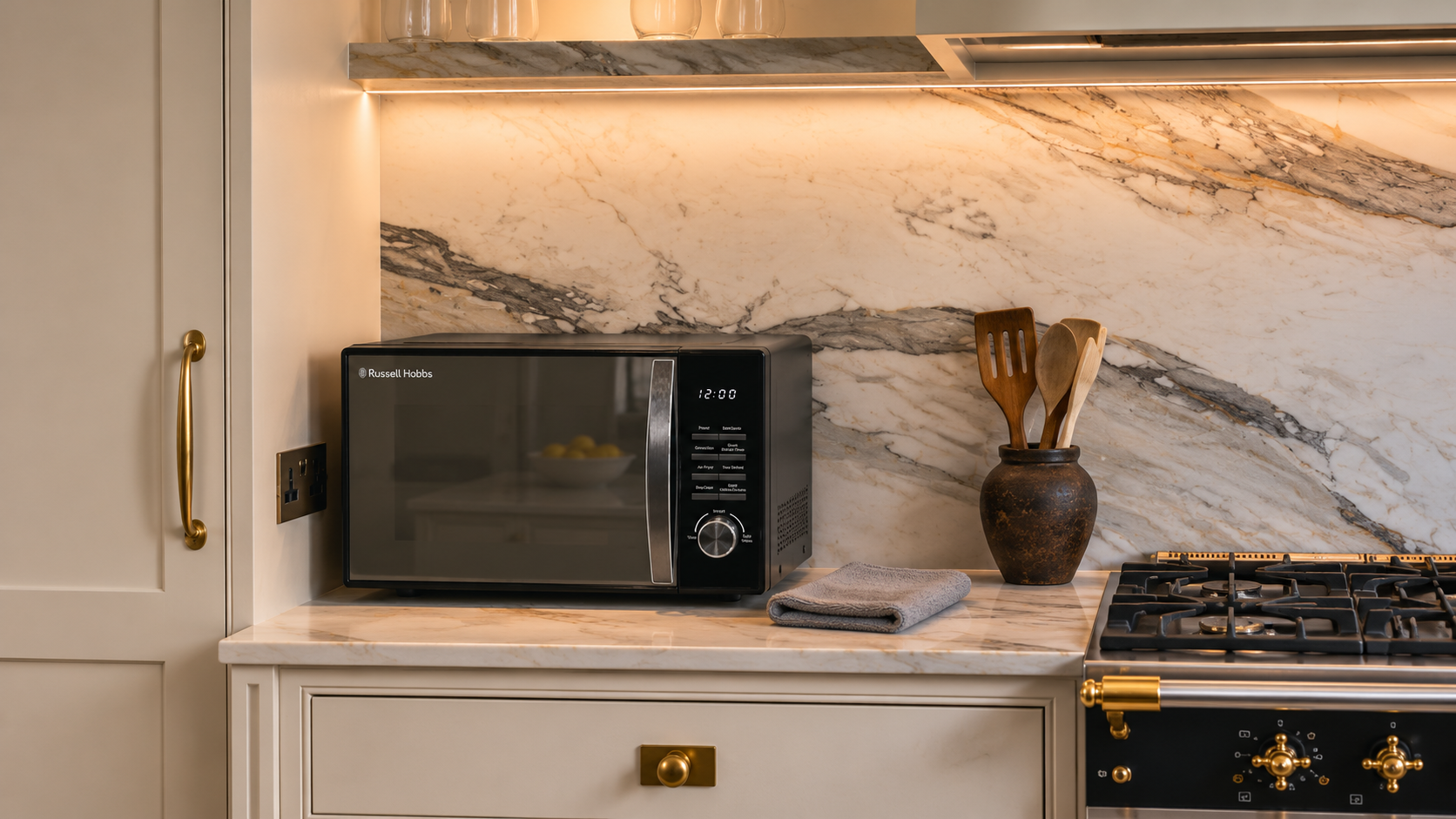
Fortunately, ordinary food splashes often need a straightforward clean. A soft cloth and the method in the appliance instructions are a better starting point than a strong oven cleaner or an elaborate homemade mixture.
Let the appliance cool and check the manual
Switch off and unplug the microwave where safely accessible, following its instructions. Let the interior and any removable parts cool. Check which parts may be removed and whether they can be washed by hand or in a dishwasher.
Have soft cloths ready, along with the mild cleaning solution permitted for your model. Panasonic, for example, recommends gentle cleaning methods and warns against abrasive treatments on relevant surfaces. Your own appliance's instructions take priority, especially for combination models with grill or oven functions.
If you see flaking surfaces, corrosion, a damaged door or other deterioration, stop and seek manufacturer advice. A cleaning session should not involve sanding, repainting or removing a protective cover.
Take out the removable parts carefully
Remove the turntable and any user-removable support according to the manual. Wash them using the approved method, rinse where required and dry before refitting. Avoid putting hot glass straight into cold water.
Keep track of how the support sits. A clean turntable that has been fitted incorrectly may not rotate properly, and forcing it into place is not the answer. Check that it is correctly seated before using the appliance again.
Wipe the accessible floor beneath it with a soft cloth. Lift crumbs out rather than pushing them into gaps. Do not flood the base with water.
Wipe the interior rather than soaking it
Use a cloth dampened with the permitted solution and work across the accessible interior. Give ordinary residue the contact time allowed by the instructions, then wipe it away gently. Rinse the cloth regularly so you remove the loosened food instead of redistributing it.
Keep moisture out of vents, controls and openings. Do not remove or scrub through the waveguide cover, the small protective panel found inside many microwaves. If it looks damaged or heavily affected, ask the manufacturer what to do.
Finish with the wipe-down or rinsing method specified in the instructions and dry accessible surfaces. Avoid heavy fragrance: the aim is to remove food residue, not replace a lunch smell with a cleaning-product smell.
Pay attention to the door and its contact surfaces
Food can collect around the door edges as well as in the cavity. Clean the accessible surfaces gently, as the manual directs, and remove residue without disturbing seals or fittings. Wipe the handle and exterior with a suitable cloth, keeping the control panel from becoming wet.
Never force a misaligned door or try to adjust its latch as part of cleaning. If it does not close properly, or there is visible damage around the door, stop using the appliance and obtain appropriate advice.
What about lemon water and steam
Heating a bowl of water or lemon is a popular suggestion, but it adds hot liquid to a job that can often be done with a damp cloth. Hot water and steam can burn, and boiling behaviour in a microwave needs care.
Use a steam cleaning method only if it is provided for in your model's instructions, with its specified container, amount, timing and waiting period. A generic recipe should not override those details. Do not run the appliance empty to try to burn off a smell.
When a smell needs more than another wipe
Once the microwave is clean and dry, reassess it. A smell from remaining food residue may improve with proper cleaning; a persistent burning or electrical smell is a reason to stop using the appliance and seek advice. Sparking also needs investigation, rather than another round of cleaning chemicals.
Cover food with a suitable microwave-safe cover where appropriate and clean accessible splashes once cool. The next clean will be easier if yesterday's sauce has not been reheated several times.
If you are working through the whole kitchen, our oven cleaning guide covers the different care an oven needs. For help with a wider kitchen reset, enquire about one-off cleaning in Dublin and agree whether the microwave interior is part of the requested work.
Frequently asked questions
Can I use oven cleaner inside a microwave?
Do not use it unless the microwave manufacturer explicitly approves that product and method. Microwave interiors and combination appliances have specific care requirements. A mild approved cleaner is the usual starting point.
Can the microwave turntable go in the dishwasher?
Check the instructions for your model and the part itself. Some turntables are dishwasher-safe and others have restrictions. Let glass cool before washing it and refit all parts correctly.
Why does my microwave still smell after cleaning?
Remaining residue may be involved, but not every smell is a cleaning problem. Persistent burning or electrical smells require appropriate advice. Do not keep operating a damaged or sparking appliance.
How often should I clean a microwave?
Deal with accessible splashes once the appliance has cooled, using its recommended method. Give the interior and removable parts a fuller clean when needed. Frequent small cleans are easier than tackling repeatedly heated deposits.